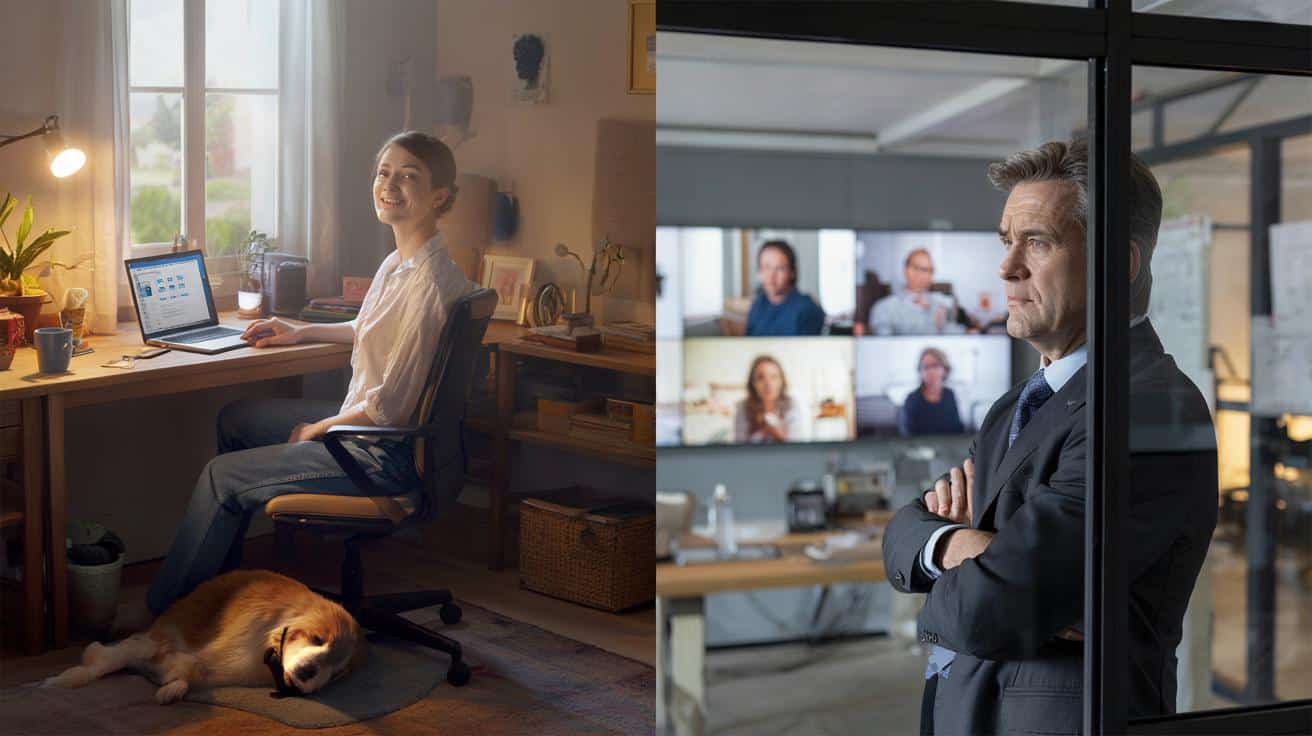
After analysing data from thousands of workers across multiple industries, scientists have reached a clear conclusion: working from home consistently makes people happier. Increased autonomy, reduced commuting stress, and better work–life balance all contribute to a significant rise in overall wellbeing. But while employees are celebrating the findings, many managers are far less enthusiastic—because the same research exposes challenges to traditional supervision and organisational control.
Why Working From Home Boosts Happiness
Scientists highlight three major factors driving this rise in happiness. First, the elimination of commuting removes one of the most consistent sources of daily stress. Second, remote workers gain more control over their environment, allowing them to optimise focus, comfort, and scheduling. Third, the added flexibility improves personal time, sleep quality, and daily rhythm. Together, these benefits create a sense of balance that traditional office routines rarely provide.

What the Research Reveals About Stress Reduction
Across the four-year study period, workers consistently reported feeling calmer and more in control when working from home. The absence of office noise, micro-interruptions, and rushed mornings contributed to lower cortisol levels and improved emotional stability. Many participants also described feeling more “human” during the workday—able to eat better, take mindful breaks, and structure tasks more naturally.
Key Details at a Glance
| Finding | What the Research Shows | Why It Matters |
|---|---|---|
| Higher happiness levels | Remote workers report stronger daily satisfaction | Wellbeing rises without major drawbacks |
| Lower stress | Commute removed, home routines improved | Mental health benefits are measurable |
| Manager concerns | Reduced oversight, mixed productivity perceptions | Forces major shifts in management style |
| Long-term trend | Employees want hybrid or remote options | Workplace expectations are changing permanently |
How Managers Are Responding to the Findings
While employees are embracing the results, managers have mixed reactions. The research highlights growing discomfort among leaders who feel remote work reduces their ability to supervise teams directly. Some report uncertainty about whether productivity metrics reflect true performance, while others struggle with the cultural shift away from traditional office norms. This tension between employee happiness and managerial control has become one of the defining workplace challenges of the decade.

How This Study Is Changing the Future of Work
The four-year research project indicates that remote and hybrid models are no longer temporary adaptations—they are becoming structural. Employees overwhelmingly express a desire to keep remote flexibility, and organisations that resist may face retention challenges. Companies adopting balanced hybrid systems often report higher morale, improved loyalty, and greater long-term stability. The findings suggest that the future of work will be shaped not by preference alone, but by scientifically demonstrated benefits to wellbeing.
Conclusion: After four years of extensive research, scientists have confirmed that working from home significantly improves happiness, reduces stress, and enhances daily wellbeing. While employees welcome the evidence, many managers remain uneasy about the shift in control and culture. As organisations adapt to these findings, the workplace will continue evolving toward models that prioritise both human wellbeing and sustainable performance.

Disclaimer: This article is based on general scientific findings and widely discussed workplace research. Individual experiences may vary depending on job type, home environment, and organisational policies. It is not a substitute for specialised human resources or psychological guidance. For personalised recommendations, consult qualified workplace or wellbeing professionals.


Callum notices the soft rural details, coastal elements, and unhurried moments that define many UK landscapes. His portrayals emphasize texture, quiet transitions, and modest visual impressions. He highlights how everyday places produce subtle emotional responses.