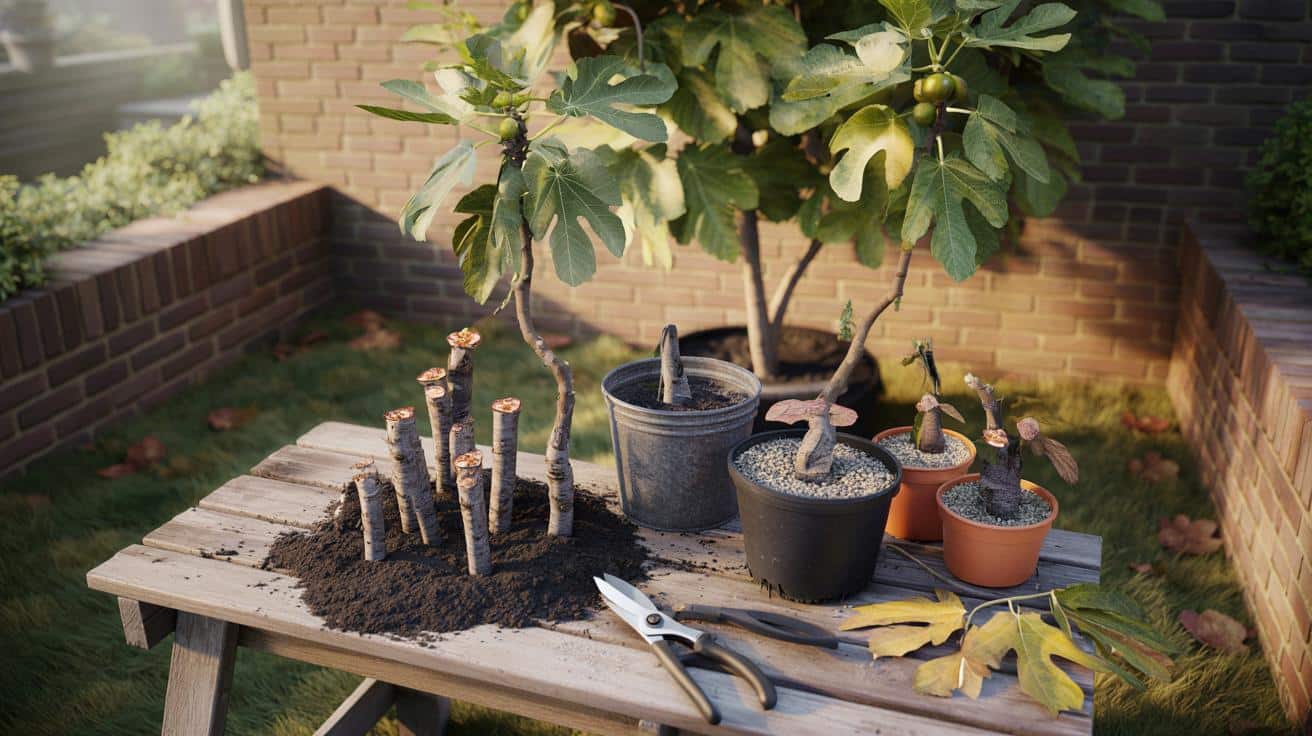
October is considered one of the best months to take fig tree cuttings, as the plant naturally begins slowing its growth and entering dormancy. Garden specialists explain that this timing allows cuttings to root more successfully, store more energy, and prepare for strong spring development. With cooler temperatures and stable moisture levels, October offers the ideal conditions to propagate new fig trees with minimal effort.
Why October Is the Best Month for Fig Cuttings
In October, fig branches transition from soft summer growth to firm semi-hardwood, which is exactly the stage that roots most reliably. The leaves begin to naturally drop, allowing the plant to redirect energy from foliage into its wood. This means the cutting you take contains stored nutrients that assist in rooting. The cooler environment also protects the cuttings from heat stress, creating the calm, steady setting they need to establish roots.

How to Select the Right Branch for Cutting
Garden experts recommend choosing a branch that grew during the current year and has firm bark with a smooth surface. The branch should be healthy, free from disease spots, and roughly the thickness of a pencil. Selecting this type of wood ensures that the cutting contains enough stored sugars to root while still being flexible enough to respond quickly to soil conditions. Carefully removing excess leaves allows the cutting to focus entirely on root development.
Fig Cutting Conditions at a Glance
| Factor | Why October Is Ideal | Expected Result |
|---|---|---|
| Growth Cycle | Branches entering dormancy | Better rooting stability |
| Temperature | Cool but not freezing | Reduced stress on cuttings |
| Moisture | More consistent soil humidity | Prevents drying and promotes root formation |
| Wood Quality | Semi-hardwood branches | Strong, healthy new plants |
| Success Rate | Typically higher in fall | Earlier establishment by spring |
Planting the Cutting for Maximum Success
Once the cutting is chosen, it can be placed directly into a pot filled with moist, well-draining soil. The lower end of the cutting should be inserted deep enough to remain stable and supported. October’s humidity and mild temperatures help maintain moisture without oversaturating the soil. Placing the pot in a sheltered outdoor corner or unheated greenhouse allows the cutting to settle in gradually through the winter months.

How the Cutting Develops Through Autumn and Winter
During the colder season, the cutting remains mostly inactive above the soil, but internal root development progresses steadily. The absence of vigorous leaf growth allows energy to be channeled downward into forming a strong root system. By early spring, the cutting is often ready to push out new buds and leaves, marking the beginning of a healthy young fig tree that adapts well to its growing environment.
Why This Method Works for Both Beginners and Experienced Gardeners
Taking fig cuttings in October does not require specialized tools or complex techniques. It relies on natural seasonal rhythms that support slow, stable rooting. Because figs are resilient and forgiving, even first-time gardeners often achieve success. Experienced growers value October cuttings for producing robust young plants that establish quickly once the warmth of spring returns.

Conclusion: October offers the perfect balance of cooler temperatures, semi-hardwood growth, and natural moisture needed for fig cuttings to root with strength and stability. Gardeners who take advantage of this seasonal window often enjoy vigorous, healthy young fig trees by spring. With simple preparation and the right timing, propagating figs becomes an easy and rewarding autumn task.
Disclaimer: This article provides general gardening guidance based on common horticultural practices. Success can vary depending on climate, soil type, and local conditions. Gardeners in extremely cold regions may need additional protection for fall cuttings. Always monitor moisture levels and adjust care techniques to suit your environment. For personalized advice, consult a regional gardening expert.


Callum notices the soft rural details, coastal elements, and unhurried moments that define many UK landscapes. His portrayals emphasize texture, quiet transitions, and modest visual impressions. He highlights how everyday places produce subtle emotional responses.