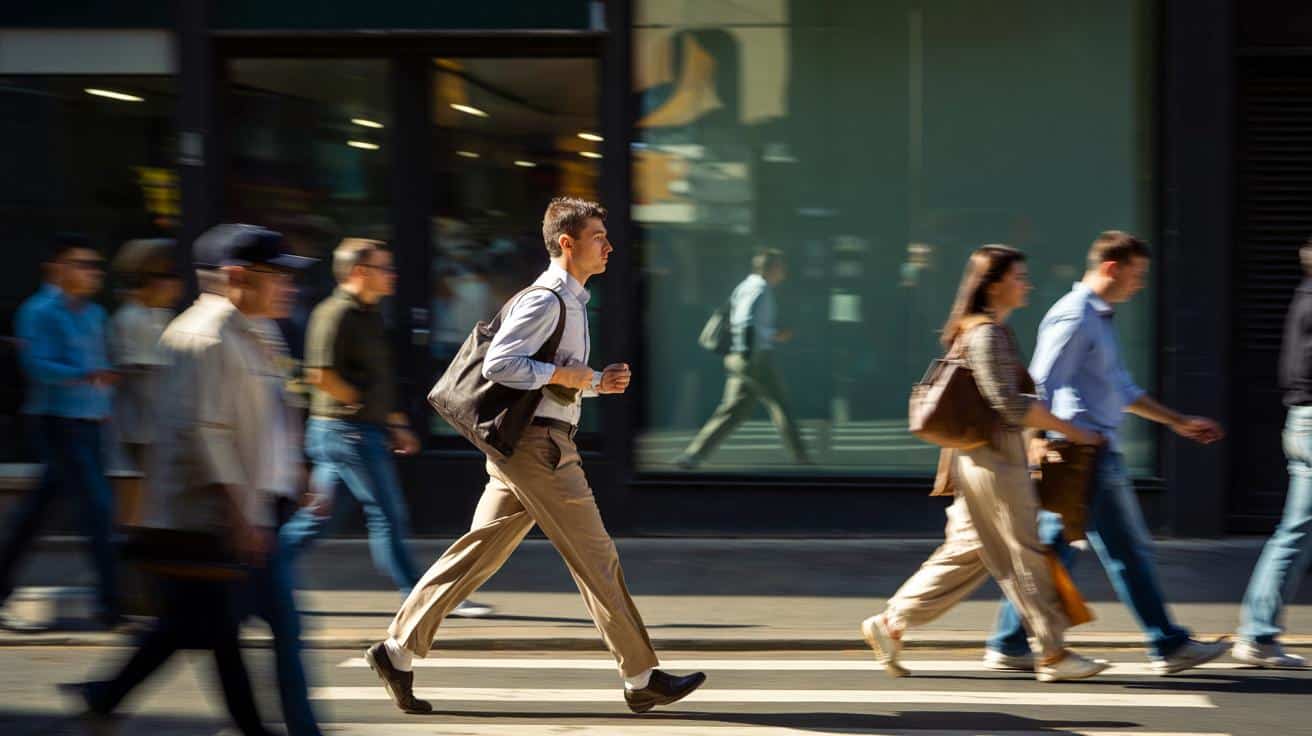
Across multiple behavioral studies, researchers have discovered a striking pattern: individuals who naturally walk faster than the average pace tend to share a set of psychological traits that appear again and again, regardless of age, country, or background. The link between walking speed and personality has become increasingly compelling as data shows that pace is not just a physical habit but also a reflection of deeper cognitive and emotional tendencies.
Why Walking Speed Reveals So Much About Personality
Walking is one of the most instinctive human behaviors, and scientists consider it a direct expression of how the brain handles information, goals, and environmental demands. Faster walkers often display a natural inclination toward structure, efficiency, and forward momentum. Studies consistently show that these individuals tend to plan ahead, process information more rapidly, and maintain a sharper focus on tasks. Their movement mirrors their mental pace, giving researchers a unique measure of underlying personality traits without relying solely on self-reported data.

Walking Speed and Personality Traits at a Glance
| Trait Category | Findings in Slow Walkers | Findings in Fast Walkers |
|---|---|---|
| Social Behavior | More cautious and reserved | More assertive and socially confident |
| Cognitive Traits | Reflective pacing | Decisive and quick-thinking |
| Emotional Patterns | Higher sensitivity and hesitance | Stronger resilience and drive |
| Daily Habits | Measured and steady routines | Goal-oriented lifestyle |
| Stress Response | Elevated when rushed | More tolerance for momentum and change |
What Studies Reveal About Social Confidence and Motivation
Individuals who walk at a quicker pace frequently exhibit higher levels of social confidence and assertiveness. Behavioral scientists note that these traits appear in how they communicate, approach problem-solving, and interact socially. Their forward stride reflects a mindset that is comfortable with taking initiative, setting goals, and adapting quickly. Faster walkers often describe themselves as motivated, independent, and inclined to keep momentum in both personal and professional settings.
The Emotional Patterns Behind a Fast Walking Pace
Emotional resilience plays a notable role in walking behavior. People who move briskly tend to handle challenges with a proactive outlook, showing less hesitation in uncertain situations. Their walking style suggests mental readiness rather than avoidance, and this correlates with lower levels of rumination and a stronger sense of purpose. While not universally true for every individual, the pattern appears consistently across large population studies, making it one of the clearer links between movement and psychological traits.

How Daily Habits Reflect the Same Personality Indicators
Researchers also observe that fast walkers often lead structured and goal-directed lives. Their routines show a preference for efficiency, planning, and productivity. Even small habits such as time management and decision-making speed align closely with their walking pattern. This reinforces the idea that walking pace is not an isolated behavior but part of a broader personality profile grounded in drive, clarity, and forward-thinking tendencies.
Why These Findings Matter for Understanding Human Behavior
The connection between pace and personality helps psychologists develop more accurate profiles without relying entirely on questionnaires. Walking speed is a natural behavior that cannot easily be faked, making it a useful indicator in research. The results also help illuminate how physical movement can reveal emotional and cognitive tendencies that influence success, stress management, and overall wellbeing.

Conclusion: Behavioral scientists consistently find that individuals who walk faster than average share notable personality indicators, including stronger motivation, higher confidence, quicker cognitive processing, and greater emotional resilience. Walking speed reflects far more than physical fitness; it offers insight into how a person approaches life, makes decisions, and responds to challenges. These recurring study results show that pace is a meaningful window into personality patterns that shape daily behavior.
Disclaimer: This article summarizes general behavioral research and does not claim that walking speed alone determines personality. Individual differences in health, environment, lifestyle, and physical ability all influence walking pace. The findings reflect patterns observed in broad populations rather than absolute rules for every person. For detailed psychological assessment, consult a qualified behavioral specialist.


Callum notices the soft rural details, coastal elements, and unhurried moments that define many UK landscapes. His portrayals emphasize texture, quiet transitions, and modest visual impressions. He highlights how everyday places produce subtle emotional responses.