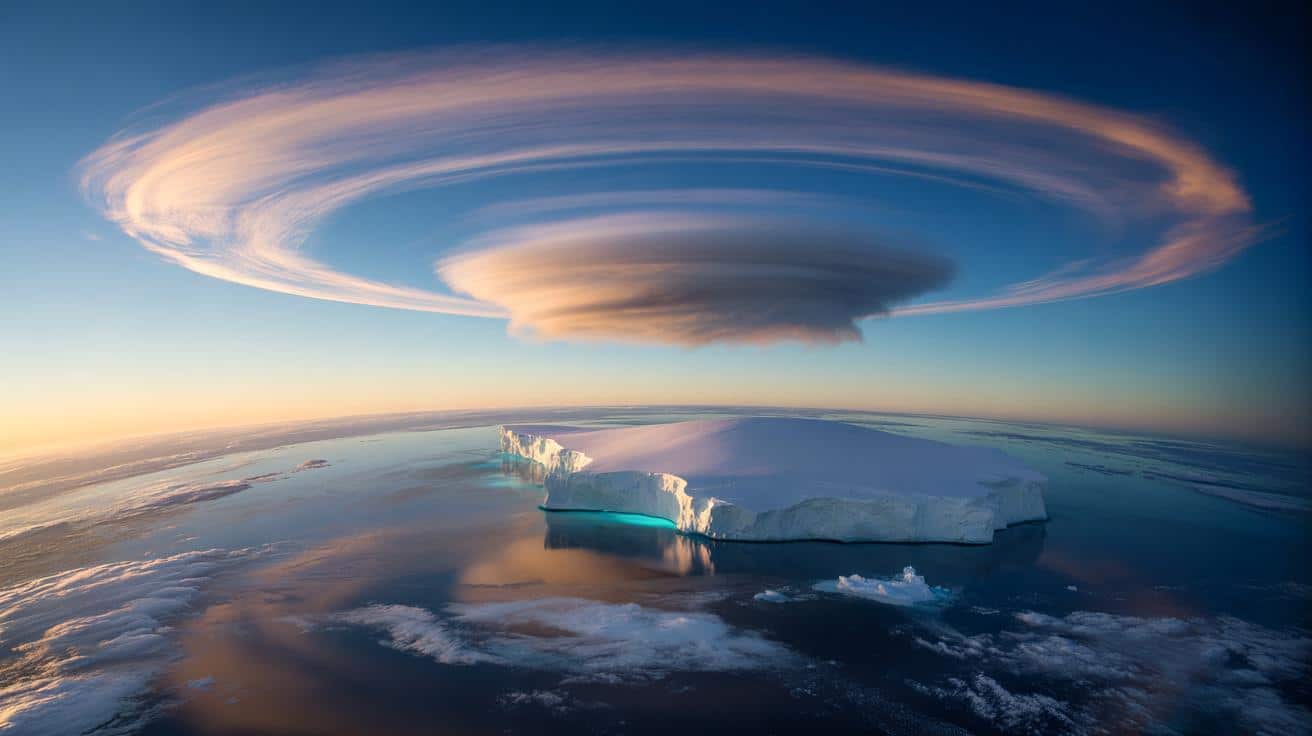
Meteorologists are tracking a rare and unusually early stratospheric warming event forming this December, and its strength is drawing global scientific attention. Such events typically occur in mid- to late winter, but this early development could shift jet stream patterns, disrupt polar vortex behaviour, and significantly alter winter weather forecasts across multiple regions.
What Makes This Early Warming Event So Unusual
Stratospheric warming involves a sudden temperature rise high above the Arctic, often by 30°C or more within days. When this happens early in the season, it can trigger unexpected atmospheric responses because the winter pattern is still forming. Scientists are surprised by the rapid pace of warming and the scale of disruption it may cause at a time when the polar vortex is typically strengthening, not weakening.

How It Could Reshape Winter Weather Patterns
Early stratospheric warming can weaken or even split the polar vortex, which normally keeps cold Arctic air locked near the poles. When disrupted, cold air can spill southward while warmer air pushes north, creating dramatic shifts. This can lead to prolonged cold spells in some countries, milder conditions in others, and increased chances of storms. The unusual timing means winter forecasts may need to be re-evaluated, as the event could override previous model expectations.
Key Details at a Glance
| Feature | Typical Timing | Current Situation |
|---|---|---|
| Stratospheric Warming | January–February | Developing in early December |
| Impact on Polar Vortex | Moderate disruption | Possible major disturbance |
| Weather Influence | Gradual | Potential rapid shift |
| Forecast Confidence | Medium | Increasing due to event intensity |
Why Scientists Are Watching Jet Stream Changes Closely
A weakened polar vortex often leads to significant jet stream waviness. These bends and dips in the jet stream guide storm tracks and temperature patterns. Early-season distortions could tilt the entire winter toward more extreme contrasts, including sharp freeze–thaw cycles or sudden regional snow events. Researchers are monitoring high-altitude wind speeds and pressure patterns to understand how far-reaching this event may become.

How This Event Influences Forecast Confidence
Meteorological models adjust continuously based on new atmospheric data. A strong December warming event introduces a major variable that forecasters must integrate. It may cause long-range predictions to shift toward colder or stormier scenarios, depending on how the vortex responds. This means that winter forecasts released earlier in the season may no longer reflect the conditions now expected.
Conclusion: The rare early-season stratospheric warming event developing in December is significant enough to influence the entire winter outlook. Its unusual timing and growing intensity could weaken the polar vortex, reshape jet stream patterns, and dramatically alter expected weather conditions. As scientists continue to analyze its behaviour, winter forecasts across multiple regions may shift in response to this developing atmospheric event.

Disclaimer: This article is based on general meteorological observations and publicly discussed atmospheric research. Weather outcomes can vary widely depending on regional patterns, long-term climate factors, and evolving atmospheric conditions. It is not a substitute for official forecasts or professional climate analysis. Always follow updates from trusted weather agencies for the most accurate guidance.


Callum notices the soft rural details, coastal elements, and unhurried moments that define many UK landscapes. His portrayals emphasize texture, quiet transitions, and modest visual impressions. He highlights how everyday places produce subtle emotional responses.