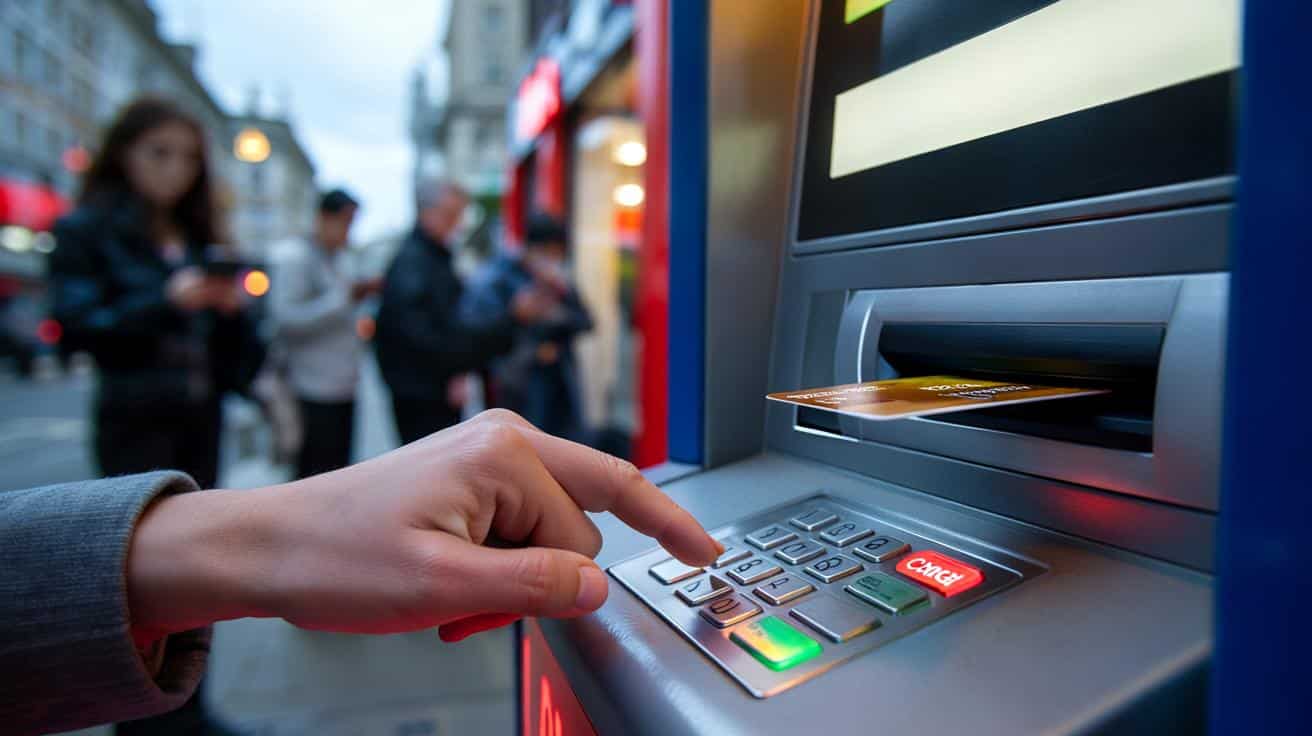
When a cash machine suddenly holds onto your bank card, panic is a natural reaction. Most people assume the card is lost forever or that the only option is to wait for bank staff to retrieve it. However, banking specialists explain that there is a quick move and a crucial button on many modern ATMs that can help you secure your account instantly before anyone else can misuse your card. Acting fast is the key, and knowing this simple step can protect your money long before help arrives.
Why ATMs Retain Cards and Why You Should Stay Calm
Cash machines hold cards for several reasons such as repeated PIN errors, expired cards, damaged chips, or simple machine malfunction. The ATM’s internal mechanism automatically secures the card in a sealed compartment. This means no one nearby can access it. Understanding that the ATM has locked the card safely allows you to focus on the step that matters most: securing your account within seconds.

The Quick Move Experts Recommend
The moment the ATM keeps your card, the important move is stepping aside from the machine and opening your banking app immediately. Nearly all modern banks include a prominent “Lock Card” or “Freeze Card” button. Pressing this button instantly blocks all withdrawals, online purchases, tap payments, and cash machine transactions. It is the fastest way to protect your funds and prevents any unauthorized use, even if the card is later retrieved by someone else.
What Happens When an ATM Keeps Your Card
| Situation | Common Assumption | Actual Reality |
|---|---|---|
| ATM retains card | Card lost or stolen | Card locked for security reasons |
| Card retrieval | Possible immediately | Only bank staff can release it |
| Action needed | Wait for assistance | Freeze or lock card instantly |
| Risk level | High until card recovered | Low once card is digitally frozen |
Why the Button Saves You From Bigger Problems
Without locking the card, your account remains vulnerable until you contact customer service. By using the freeze function, the card becomes inactive within seconds. This gives you complete control while buying time to speak with your bank. Because this feature is reversible, you can later unlock or replace the card without stress. The freeze button has become one of the most valuable tools in modern banking because it protects your money immediately, without waiting for the card to be physically recovered.

What to Do After Freezing Your Card
Once your card is locked, you can safely contact your bank to report the issue. They will verify whether the ATM intentionally retained the card or if a technical malfunction occurred. Depending on the ATM’s location, the bank may return the card later or issue a replacement. Either way, your funds remain secure because the freeze button prevents any activity until you choose to reactivate or replace the card.
The Button Every Cardholder Should Know About
Banking specialists continue to emphasize that the freeze or lock button is one of the most important security features cardholders often overlook. It replaces the outdated need to cancel a card immediately and offers instant peace of mind. People who know and use this feature experience fewer fraudulent charges and recover from ATM incidents more easily.

Conclusion: When a cash machine keeps your card, there is no secret mechanical trick to retrieve it, but there is a fast and effective way to protect yourself. The quick move is simply stepping back, opening your banking app, and using the freeze or lock button to secure your card instantly. This modern safety feature shields your account long before help arrives and ensures your money stays under your control.
Disclaimer: This article provides general information about common ATM procedures and modern banking tools. ATM systems differ, and not all machines or banks offer identical features. Card freezing may vary by region, and individuals should follow instructions provided by their financial institution. For specific concerns, always contact your bank directly for accurate guidance.


Callum notices the soft rural details, coastal elements, and unhurried moments that define many UK landscapes. His portrayals emphasize texture, quiet transitions, and modest visual impressions. He highlights how everyday places produce subtle emotional responses.