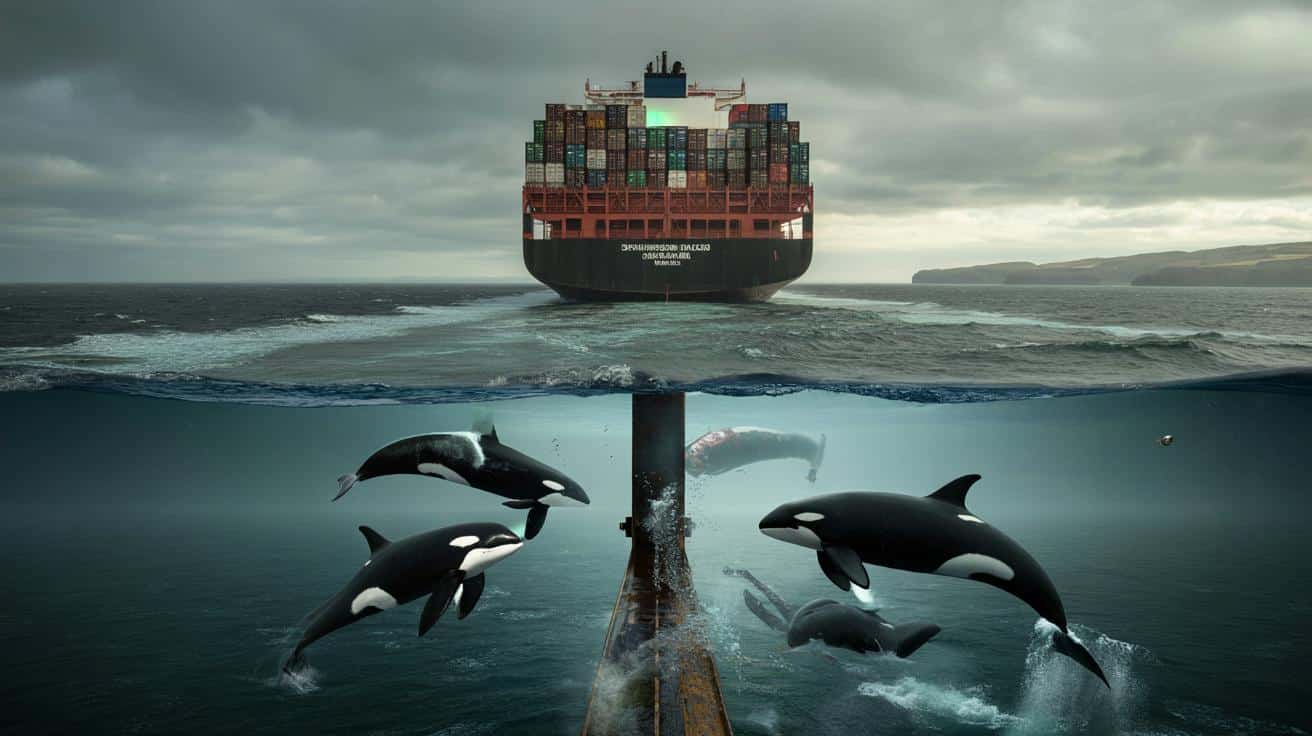
Maritime authorities across the North Atlantic are on high alert after a rise in unusual and increasingly aggressive interactions between orca pods and commercial vessels. What began as isolated incidents involving small sailboats has now escalated into deliberate, repeated confrontations with larger ships, leading experts to describe the behavior as surprisingly coordinated. As traffic intensifies through the busy shipping corridors near the Iberian Peninsula, crews and researchers are urging heightened caution.
Why Experts Are Alarmed by This New Pattern
Marine biologists have long documented the intelligence and social cooperation of orcas, yet the recent shift in behavior marks a significant departure from typical interactions. The whales approach vessels in groups, position themselves with precision near the stern, and focus on the rudder where steering is most vulnerable. Some vessels report rapid, repeated impacts that disable navigation within minutes. The coordinated nature of these movements suggests the whales are communicating, learning, and possibly teaching this behavior within their pods.

Possible Reasons Behind the Coordinated Attacks
Researchers are exploring several theories to understand why orcas might be exhibiting this behavior. One possibility is that a few dominant individuals experienced past negative encounters with boats and began reacting defensively. Another theory points toward social learning, as younger orcas appear to imitate the actions of older pod members. Changing food availability in certain regions may also increase their presence near shipping routes. The vibration and movement of rudders could be attracting the whales, stimulating curiosity that has evolved into destructive interaction.
Orca Encounters and Vessel Incidents at a Glance
| Issue | Previous Reports | Current Situation |
|---|---|---|
| Types of Vessels Targeted | Mainly sailboats | Including commercial ships |
| Location | Iberian coastal zones | Spreading through North Atlantic routes |
| Behavior | Occasional nudging | Deliberate strikes on rudders |
| Expert Interpretation | Curiosity or play | Coordinated behavior within pods |
| Risk Level | Moderate | Elevated for navigation and safety |
Impact on Commercial Shipping and Maritime Safety
Commercial vessels are now reporting encounters once thought limited to leisure boats. Rudder damage, temporary loss of steering, and emergency assistance are becoming more common. Larger ships are harder to disable, yet repeated interactions slow navigation and raise safety concerns, particularly in busy or storm-prone waters. Crews describe unsettling moments when multiple orcas surround the vessel, making it difficult to maneuver or escape the area safely. Maritime agencies in the region have begun issuing warnings and recommending route adjustments where feasible.

How Authorities and Researchers Are Responding
Coastal monitoring programs have intensified tracking of known orca pods to map their movement patterns. Authorities advise reducing speed in high-risk zones, maintaining manual steering readiness, and avoiding sudden engine changes that may draw attention. Scientists are working to better understand the motivations behind the behavior so that long-term strategies can be developed to protect both ships and marine life. There is growing agreement that the situation could expand if the behavior continues to spread socially within orca populations.
What This Means for the Future of North Atlantic Navigation
Shipping operators are increasingly aware that this behavior may not disappear quickly. If pods continue teaching these techniques across generations, encounters could become more widespread throughout the North Atlantic. The incidents highlight a new and unexpected challenge in maritime navigation, emphasizing the need for real-time communication between vessels, improved monitoring of marine mammal activity, and updated safety protocols. What experts once considered an anomaly may evolve into a persistent issue that shapes how routes are managed and how ships prepare for wildlife interactions.

Conclusion: The rise of coordinated orca interactions with commercial vessels marks a striking and unprecedented development in the North Atlantic. Experts warn that these deliberate rudder-focused encounters represent more than isolated incidents and could significantly affect maritime operations if the behavior spreads. Understanding the motivations behind the whales’ actions and adapting navigation practices are essential steps toward ensuring the safety of crews while respecting the complex instincts of these intelligent marine mammals.
Disclaimer: This article summarizes general observations and expert commentary about recent orca behavior. It does not replace official maritime safety guidelines or scientific research updates. Conditions at sea vary, and individual encounters may differ based on vessel type, location, and timing. Mariners should follow instructions from local authorities and consult official advisories for accurate and current information on marine wildlife interactions.



Callum notices the soft rural details, coastal elements, and unhurried moments that define many UK landscapes. His portrayals emphasize texture, quiet transitions, and modest visual impressions. He highlights how everyday places produce subtle emotional responses.