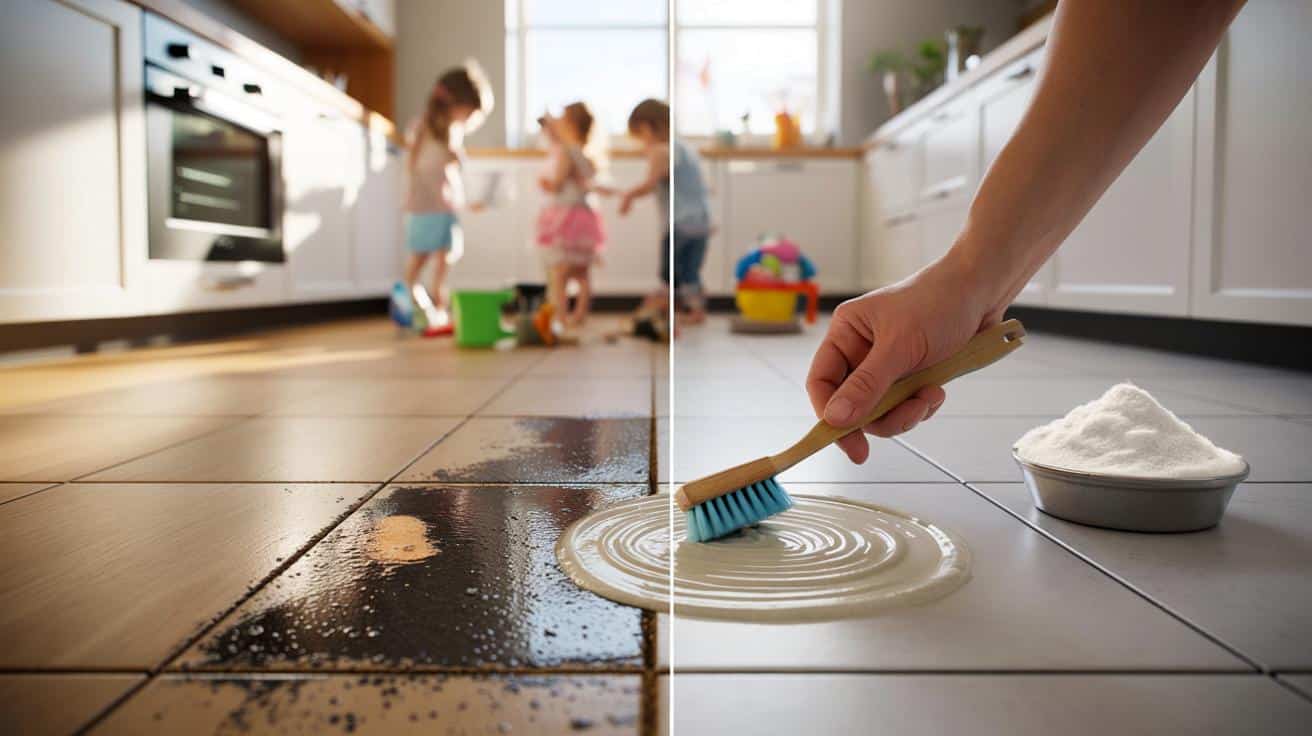
For millions of households, blackened grout is one of the most frustrating cleaning challenges. Traditional methods often rely on harsh products like bleach or strong acidic solutions such as vinegar, which can damage tile surfaces over time. Cleaning experts now highlight a gentle yet surprisingly effective hack that restores grout to a clean, bright finish without relying on those harsh ingredients. This simple approach uses a mild, tile-safe combination that lifts dirt while preserving the integrity of the grout.
The Hack Professionals Recommend for Blackened Grout
Cleaning specialists point to a gentle mixture made from a mild pH-neutral cleaner combined with a small amount of baking soda to form a smooth paste. The mixture clings to grout lines and naturally lifts the embedded grime that causes dark discoloration. It softens buildup without stripping the grout or harming tile surfaces. When applied along tile joints and left for a short period, the paste begins loosening the dirt on its own, making it much easier to wipe away.

Why This Technique Works Without Harsh Chemicals
Grout darkens because of absorbed dirt, moisture, oils from kitchen floors, and residue from bathroom humidity. Strong acids or chlorine can temporarily brighten the surface but gradually weaken grout structure. The new method targets the dirt rather than the grout itself. The pH-neutral element prevents erosion while baking soda provides a gentle, non-damaging lift. This combination preserves the grout’s strength and protects delicate tiles such as marble and travertine, which can be damaged by vinegar or bleach.
Grout Cleaning Methods at a Glance
| Method | Common Issues | Why the New Hack Works Better |
|---|---|---|
| Bleach | Can erode grout and discolor tiles | Avoids corrosive chemicals |
| Vinegar | Damages natural stone and weakens grout | Uses pH-neutral, safe mixture |
| Scrubbing alone | Often ineffective on deep stains | Breaks down buildup for easier cleaning |
| Steam-only | Can loosen old grout | Controlled moisture and safe ingredients |
How to Apply the Mixture for Maximum Effect
The method works best on clean surfaces, so wiping the floor first removes loose debris. After preparing the smooth paste, it can be spread along grout lines with a cloth or soft brush. Allowing it to rest gives the ingredients time to react with embedded grime. Light agitation afterward helps bring the mixture and loosened dirt to the surface. A damp cloth then removes residue, revealing cleaner grout with far less scrubbing than most traditional approaches. Finishing with a clear rinse leaves the tiles bright and fresh.

Why Households Prefer This Gentle Hack
Many people are turning to this method because it avoids strong odors, doesn’t irritate skin, and doesn’t discolor tiles or grout. Families appreciate that it works on kitchen and bathroom floors alike, delivering a noticeably cleaner look without chemical intensity. The results often improve even further when used occasionally as part of routine maintenance, keeping grout from ever returning to that blackened, stubborn state.
A Long-Term Bonus for Floor Longevity
Using this gentle approach also helps maintain grout strength over time. Bleach can slowly eat away at the binder, making grout more prone to cracking. Vinegar can dissolve minerals in natural stone tiles. By relying on a neutral, non-corrosive combination, this hack keeps the floor’s structural elements intact while still offering a visibly cleaner finish. This contributes to longer-lasting grout and better preserved tile surfaces.

Conclusion: This simple, vinegar-free and bleach-free hack offers an effective way to restore grout without risking damage to tiles or weakening the joints. By combining a pH-neutral cleaner with baking soda, the method lifts grime gently and leaves tiled floors looking noticeably fresher. It proves that spotless grout does not require harsh chemicals and that a clean, bright floor is achievable with a safer and more reliable approach.
Disclaimer: This article provides general cleaning information based on common expert recommendations. Results may vary depending on the age of the grout, the type of tiles, and the level of staining. Always test any cleaning mixture on a small, inconspicuous area before applying it widely. For severe grout deterioration or structural issues, consult a flooring specialist for appropriate guidance.


Callum notices the soft rural details, coastal elements, and unhurried moments that define many UK landscapes. His portrayals emphasize texture, quiet transitions, and modest visual impressions. He highlights how everyday places produce subtle emotional responses.