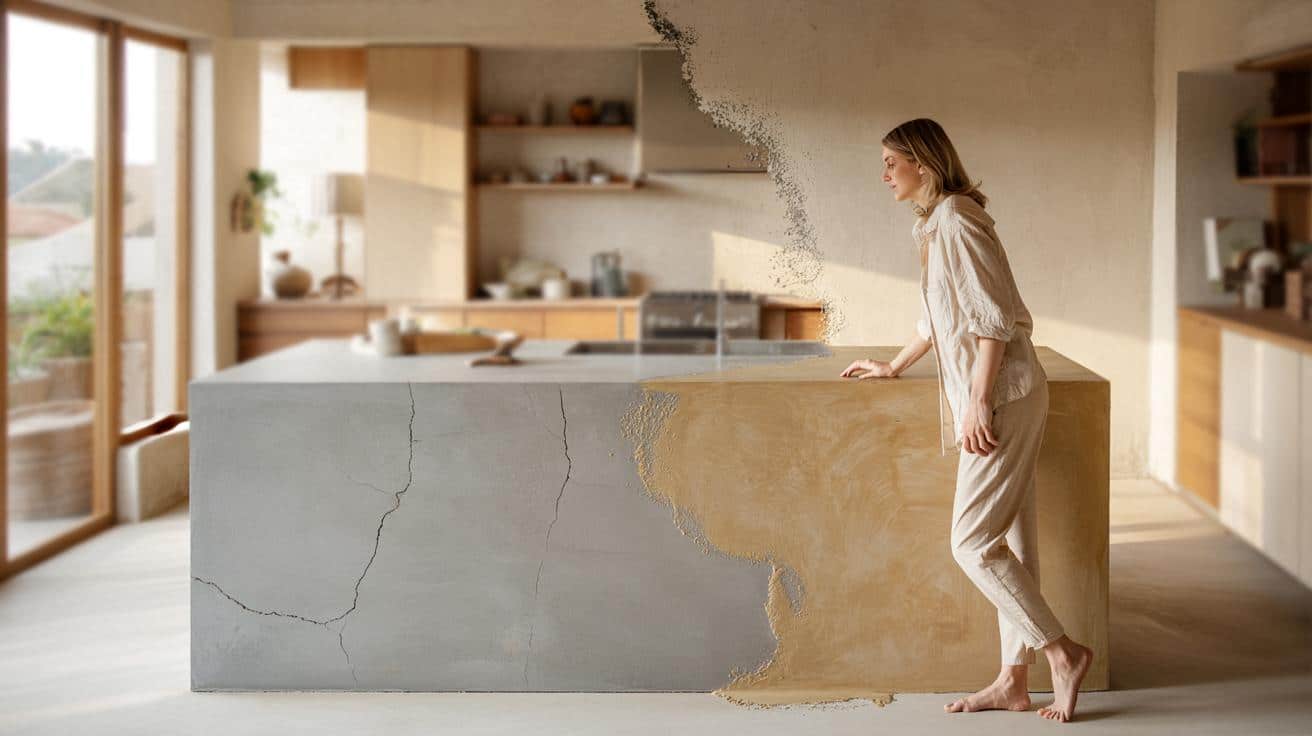
Microcement has dominated interior design for years with its smooth, minimalist, industrial look. But experts now say its reign is coming to an end in 2025. Home designers, contractors, and renovators agree that a new material is overtaking it—one that solves the biggest complaints about microcement while keeping the modern aesthetic people love. This emerging favorite is quickly becoming the go-to choice for floors, bathrooms, and kitchen walls.
The Material Replacing Microcement: Mineral-Based Decorative Plaster
Interior specialists confirm that mineral-based decorative plaster—sometimes referred to as “mineral micro-lime coating” or “high-resistance lime plaster”—is the new star of modern interiors. This refined material offers a similar seamless look but eliminates the technical weaknesses that caused microcement to decline. Its flexibility, breathability, and natural waterproof qualities are making it the preferred choice for contemporary renovations.

Why Microcement Is Losing Its Popularity
Microcement became trendy because it created a minimalist, spa-like finish. However, homeowners and contractors have increasingly reported issues such as hairline cracks, staining, difficult maintenance, and the need for expert installation. Even small temperature changes can cause imperfections. As a result, people now seek a material that offers the same aesthetic appeal without the long-term frustrations.
Microcement vs. the New 2025 Trend Material at a Glance
| Feature | Microcement | The New Replacement Material |
|---|---|---|
| Durability | Prone to cracking | More flexible and resistant |
| Installation | Complex, requires specialists | Faster and easier to apply |
| Waterproofing | Needs multiple sealants | Naturally water-resistant |
| Finish | Smooth industrial look | Similar look with warmer texture |
| Maintenance | Can stain or dull over time | Easier to clean, longer-lasting |
Why Mineral Decorative Plaster Is Taking Over
This next-generation plaster applies in thin layers like microcement but performs far better. Its natural composition—often lime or clay combined with fine aggregates—makes it more elastic and breathable. Because it naturally handles humidity, it’s ideal for bathrooms, showers, and kitchens. It also resists cracking and doesn’t require as many sealing steps, simplifying installation and reducing cost. Designers appreciate its warm, velvety matte finish that feels more organic and luxurious.

How It Elevates Modern Interiors
Mineral decorative plaster adapts beautifully to walls, floors, sinks, fireplaces, and even accent surfaces. Its texture adds depth while maintaining a sleek, seamless appearance. Unlike the cold, industrial feel of microcement, the new material brings softness and elegance. It aligns with the 2025 design shift toward natural materials, earthy tones, and calming interiors. Homes feel more inviting, while still maintaining a contemporary edge.
Maintenance and Longevity That Win Homeowners Over
One of the main advantages is ease of maintenance. The surface resists stains better and maintains its finish longer. Because it doesn’t rely on thick sealants, it ages gracefully without peeling or developing shiny patches. Homeowners find the upkeep minimal, and professionals praise its long-term stability—an essential factor for high-use areas.

Conclusion: 2025 marks the shift away from microcement as homeowners embrace materials that combine beauty, durability, and simplicity. Mineral-based decorative plaster is emerging as the winning alternative, offering a seamless modern look with fewer technical issues. With its improved performance and softer aesthetic, it’s set to dominate interior design for years to come.
Disclaimer: This article provides general insights into current interior design trends. Actual results may vary depending on product type, quality, application method, and environmental conditions. Always consult a professional installer or materials specialist before beginning renovation projects to ensure compatibility with your home and desired finish.


Callum notices the soft rural details, coastal elements, and unhurried moments that define many UK landscapes. His portrayals emphasize texture, quiet transitions, and modest visual impressions. He highlights how everyday places produce subtle emotional responses.