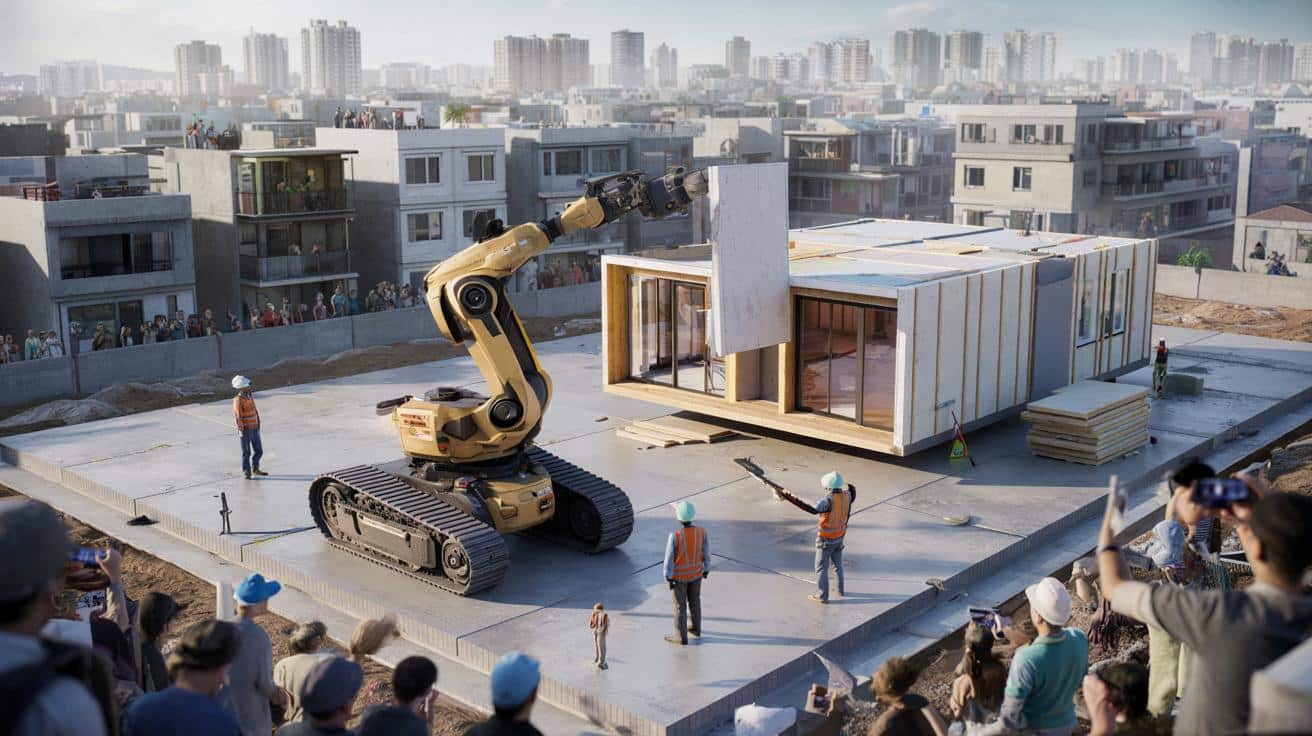
A new construction robot capable of assembling a full house in a single day is drawing global attention from city planners, engineers, and housing experts. As urban areas struggle with rising populations, high construction costs, and labor shortages, this technology is being seen as a potential breakthrough in addressing long standing housing challenges.
What the One Day Construction Robot Can Do
The construction robot is designed to automate major stages of home building, including structural assembly, wall placement, and core framework installation. Using advanced robotics, precision sensors, and pre programmed building plans, the system works continuously with minimal human intervention.
Unlike traditional construction methods that can take weeks or months, this robot completes the main structure within 24 hours under controlled conditions.

How the Technology Works
The robot operates using modular construction principles. Building components are prepared in advance and then assembled on site by the robotic system. Artificial intelligence guides positioning, alignment, and sequencing, ensuring accuracy and reducing material waste.
Real time monitoring allows the robot to adjust for minor environmental changes, improving build consistency compared to manual methods.
Why This Matters for Urban Housing Shortages
Many cities face a growing gap between housing supply and demand. Limited land, rising labor costs, and slow construction timelines have made it difficult to build affordable homes quickly. A robot that can construct houses in a single day could dramatically increase building speed and lower overall costs.

Faster construction also means quicker occupancy, helping cities respond more effectively to housing needs.
Key Benefits Highlighted by Housing Experts
Experts point to several advantages of robotic home construction:
• Significantly faster build times
• Reduced dependence on skilled labor
• Lower construction costs over time
• Consistent build quality and precision
• Reduced material waste
These benefits make the technology especially attractive for dense urban areas.

Potential Impact on Construction Jobs
While the robot reduces the need for manual labor in certain tasks, it does not eliminate human involvement entirely. Skilled workers are still needed for system operation, supervision, finishing work, electrical systems, plumbing, and inspections.
Many experts believe the technology will shift construction jobs rather than replace them, creating demand for new technical and supervisory roles.
Challenges and Limitations
Despite its promise, the technology faces challenges. High initial investment costs, regulatory approvals, zoning laws, and public acceptance may slow widespread adoption. The system is also best suited for standardized designs, which may limit architectural flexibility.

Ongoing testing and policy adjustments will be critical for large scale deployment.
What This Could Mean for the Future of Housing
If adopted widely, construction robots could change how cities plan and deliver housing. Rapid build capability may support affordable housing programs, disaster recovery efforts, and large scale urban development projects. As the technology improves, its role in shaping future cities is expected to grow.
Conclusion:
The construction robot capable of building a full house in one day represents a significant step toward solving urban housing shortages. By increasing speed, efficiency, and consistency, this innovation has the potential to transform residential construction and help cities meet rising housing demand more effectively.

Disclaimer: This article is for general informational purposes only. Construction technologies, regulations, and housing outcomes may vary by location and implementation. This content should not be considered engineering, legal, or investment advice.

Callum notices the soft rural details, coastal elements, and unhurried moments that define many UK landscapes. His portrayals emphasize texture, quiet transitions, and modest visual impressions. He highlights how everyday places produce subtle emotional responses.