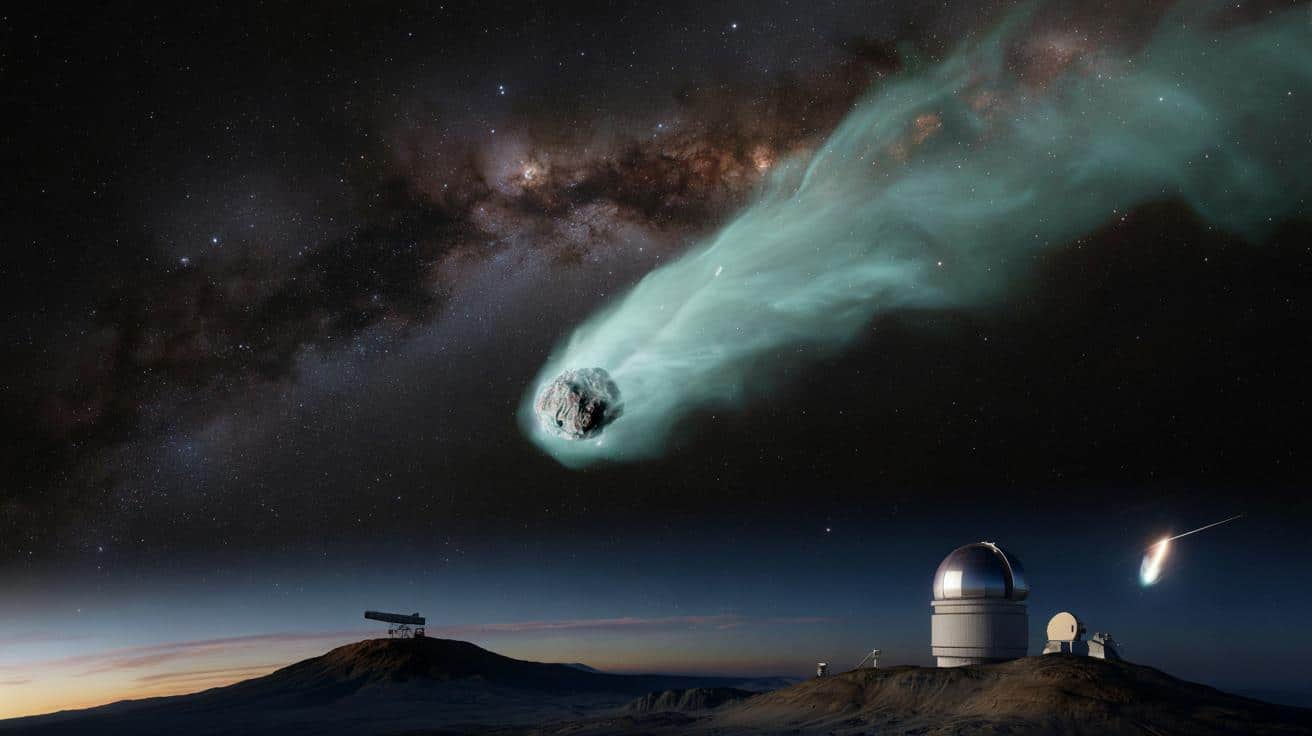
Astronomers have unveiled a spectacular new collection of images showcasing interstellar comet 3I ATLAS, one of the rarest cosmic visitors ever observed. Captured through a coordinated effort across multiple observatories, these images reveal remarkable details about the comet’s brightness, tail structure, and possible composition. Scientists say this new dataset marks one of the clearest views humanity has ever had of an object originating from another star system.
Why 3I ATLAS Is Such a Scientific Breakthrough
Interstellar objects like 3I ATLAS are extraordinarily uncommon. Unlike typical comets formed within our solar system, this one carries material shaped around a different star entirely. Its arrival gives astronomers a rare opportunity to examine the building blocks of distant planetary systems. Every image provides valuable evidence about its shape, brightness changes, and how it reacts to solar radiation, offering deeper clues about the environments it once called home.

What the New Images Reveal About the Comet
The newly released images show a beautifully defined tail stretching farther than early models predicted. Its bright coma appears unusually smooth, hinting at a fresh release of dust and gases as it interacts with the Sun’s heat. Subtle colour differences within the tail suggest diverse chemical compounds—possibly including ices or minerals not commonly found in local comets. With each observatory capturing the comet from a different vantage point, scientists now have one of the most complete visual records of an interstellar visitor.
Key Details at a Glance
| Feature | What Observers Found | Why It Matters |
|---|---|---|
| Comet Type | Interstellar object | Only the third ever confirmed |
| Imaging Sources | Multiple global observatories | Offers multi-angle, high-clarity insights |
| Visible Structures | Extended tail, bright coma | Helps decode its journey and materials |
| Scientific Value | Rare off-world sample | Reveals clues about other planetary systems |
How Multiple Observatories Delivered Such Clear Results
This imaging success is the result of international collaboration. Telescopes in different regions documented the comet under varied atmospheric conditions, allowing astronomers to combine observations into sharper, more detailed composites. Wide-field instruments captured the full tail span, while deep-sky telescopes focused on inner structures. This layered approach has produced an exceptional level of clarity that no single observatory could achieve on its own.

How 3I ATLAS Expands Our Understanding of Other Solar Systems
Interstellar comets act as messengers from distant star systems. By analysing light reflected from 3I ATLAS, scientists can explore its temperature, dust composition, and the chemical fingerprints of its origin. This helps researchers refine models of how planets, moons, and comets form around other stars. The comet’s survival through extreme cosmic environments also provides insight into how materials evolve across interstellar space before reaching our solar system.
Conclusion: The release of stunning new images of interstellar comet 3I ATLAS marks a major milestone in modern astronomy. The multi-observatory effort has delivered an extraordinary visual record of a rare cosmic traveller, offering scientists fresh insights into the nature of distant planetary systems. As researchers continue to analyse the data, 3I ATLAS will remain one of the most fascinating interstellar visitors ever captured in such detail.

Disclaimer: This article is based on general astronomical findings and publicly discussed scientific observations. Image clarity, interpretation, and conclusions may evolve as more data becomes available. It is not a substitute for professional research reports. For accurate and updated information, follow official releases from astronomical institutions.


Callum notices the soft rural details, coastal elements, and unhurried moments that define many UK landscapes. His portrayals emphasize texture, quiet transitions, and modest visual impressions. He highlights how everyday places produce subtle emotional responses.